Showing posts with label art history. Show all posts

Thursday, 14 April 2016

Cinema and Art: A Brief Encounter...

Hello everybody! I'm sorry for the lack of posts over these couple of months. I've been going through some shit and I haven't really had the energy to write anything. BUT! Today I had a random surge of motivation and decided to finish off this post that has been sitting in my drafts for eons. It's a more casual post, but I wanted to write something more fun before diving back into writing serious essays and articles.

To a certain extent, film and art are very much connected, and have been for a long time. Artists have used film to make work, and filmmakers have used artworks in their movies. Artworks are mainly used in film as a device to foreshadow future events, add depth to a scene, or simply just enrich the meaning of the movie or tv show.

EX MACHINA

Ex Machina, 2015, dir. Alex Garland
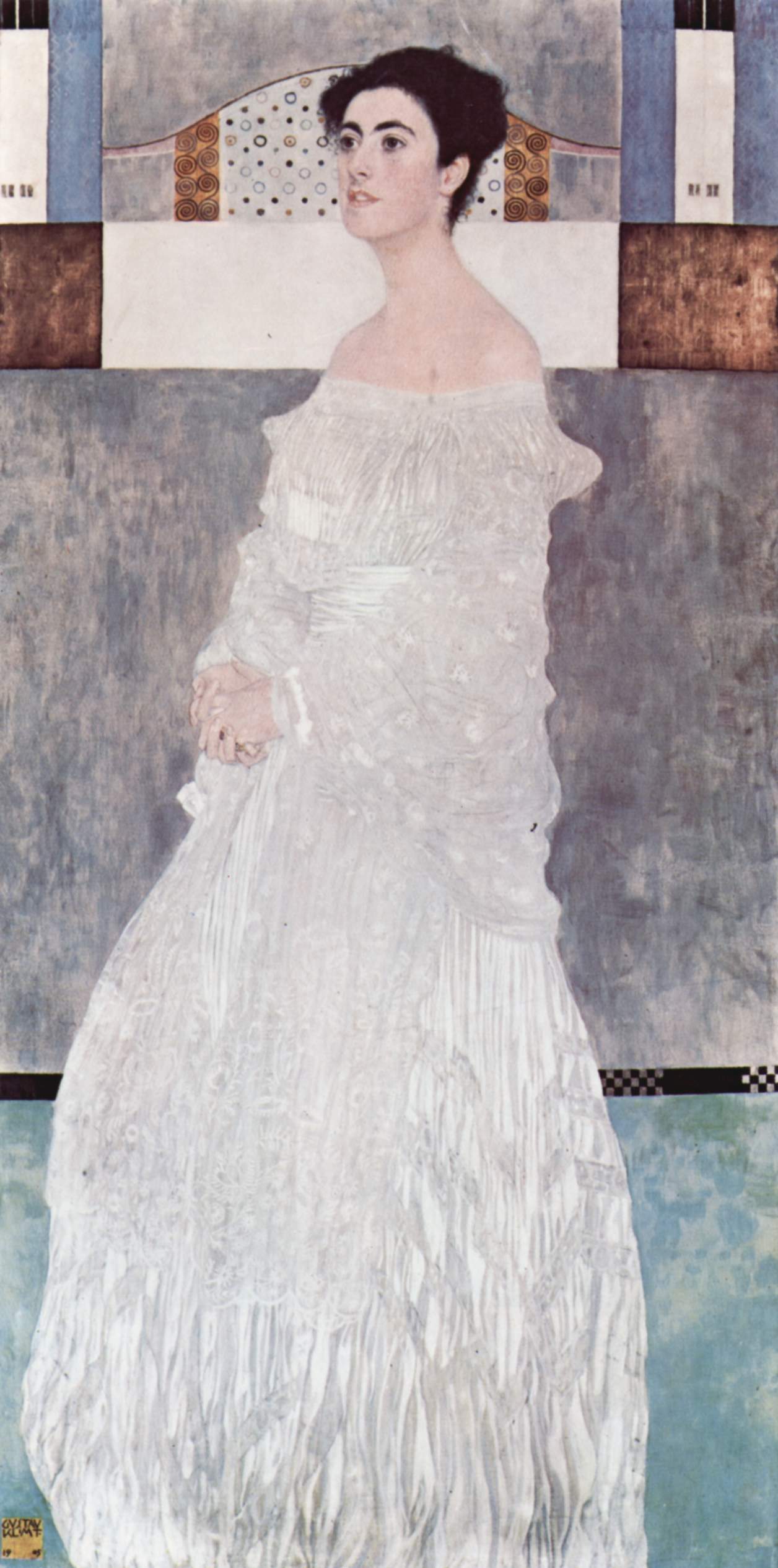
Ex Machina was interesting to me because of its use of a Jackson Pollock painting and a Klimt portrait (which was shown very briefly, if I remember that correctly..) The use of Pollock in that particular scene was curious. Isaac's character, Nathan Bateman, uses Pollock and his painting style to illustrate the point that willpower gives the illusion of free will. When you really start to think about it, it's a massive clusterfuck of the philosophy of free will and consciousness, which, in all honesty, gave me a headache!!
THE CHALLENGE IS NOT TO ACT AUTOMATICALLY, IS TO FIND AN ACT THAT IS NOT AUTOMATIC...
Here is the scene...

As to why the producers/set designers/writers/etc decided to put the portrait of Margaret Stonborough-Wittgenstein in Ava's room, I don't know. However, I did know that Margaret's brother, Ludwig, was a philosopher. A quick search in google showed me that his work was mainly about communication between people and the difficulties of language. Perhaps the philosophy of communication and Ludwig's ideas on it form a parallel to the communication between Ava and Caleb? Or, does Margaret Wittgenstein represent Ava in a way, and Ludwig represents Nathan?

Ex Machina, 2015, dir. Alex Garland
Portrait of Margaret Stonborough-Wittgenstein  by Gustav Klimt (1862-1918)
oil on canvas, 1905
Hannah K. Gold's article has a very good section on the 'iconography' of Ludwig Wittgenstein in the movie:

Like Ava, Nathan himself has an imposing father figure: Ludwig Wittgenstein. In addition to Pollock’s drip paintings, Nathan hangs in his bunker Klimt’s portrait of Margaret Stonborough, Wittgenstein’s sister. He also names his company after a section from Wittgenstein’s notebooks, which—like Mary’s Room—is about the limits of symbolic, fixed language, words divorced from experience. A passage from Wittgenstein’s journal reads: “The meaning of a phrase for us is characterized by the use we make of it.” Which is to say: It’s not what we say but how we say it, including to whom. Or, as Nathan puts it, there is no consciousness without interaction. One must dip in and out of other psyches in order to gain knowledge.

GOTHAM

Gotham is a TV series based on the Batman franchise, focusing mainly around Bruce Wayne and James Gordon. I've only seen the first season, I wouldn't say it's the best but it's got very good pacing and it keeps me interested in what's going to happen next.

ANYWAY! The reason why this series is featured is because, in one of the rooms in Bruce Wayne's house, you can see Oath of the Horatii! 

Gotham series 1, 2014-2015
Oath of the Horatii by Jacques-Louis David (1748-1825)
oil on canvas, 1784
This, I think, is the simplest one to put together symbolically. The painting, in which the Horatii brothers swear to defeat their enemies or die, can be linked to the storyline of Bruce Wayne, who's parents are murdered, which leads him to become Batman of course.

The placement and emphasis of the painting in the room, and if I remember correctly it makes more than one appearance, made me really happy as an art historian and it was just really satisfying to see it in the background. More artworks in movies/tv shows please for enhanced viewing experiences!!

FERRIS BUELLER'S DAY OFF

This is more of an honorary mention if I'm completely honest, because I think this must be one of the most iconic uses of art in film ever, so I though I should at least mention it briefly.

Ferris Bueller's Day Off, 1986, dir. John Hughes
John Hughes said this in regards to the scene; 
“I always thought this painting was sort of like making a movie, the pointillist style,” he says. “You don’t have any idea what you’ve made until you step back from it. ... The more he looks at it, there’s nothing there. He fears that the more you look at him, the less you see.”
A Sunday Afternoon on the Island of La Grande Jatte by Georges Seurat (1859-1891)
oil on canvas, 1884-6
And honestly... that's about it! I haven't seen a lot of movies recently and the ones that I have watched, I can't remember any artworks catching my eye...

You can look up more paintings that have been in movies here, and here.

There's a book that's specifically focuses on the use of art in cinema, you can look at a few (very few...) pages of it on google books here.

SOURCES

https://www.washingtonpost.com/blogs/arts-post/post/john-hughes-video-explains-ferris-bueller-scene-at-art-institute/2011/11/16/gIQAZBAERN_blog.html

http://www.louvre.fr/en/oeuvre-notices/oath-horatii

https://newrepublic.com/article/121766/ex-machina-critiques-ways-we-exploit-female-care

https://www.youtube.com/watch?v=pQ33gAyhg2c

https://newrepublic.com/article/121766/ex-machina-critiques-ways-we-exploit-female-care

https://books.google.co.uk/books?id=TVSlBgAAQBAJ&dq=art+in+film&source=gbs_navlinks_s


Friday, 15 January 2016

Fashion, Femininity and Theatre: Joshua Reynolds and Women and 18th Century English Portraiture

In 18th century Europe, the middle class attained economic, social and political power. Consequently, the aristocracy was completely displaced by the middle class and changes in taste. Art and culture of the 18th century saw a transfer of leadership from one social class to another. In result of that, portraiture, which previously had sat lower in the hierarchy of genres, became more esteemed in society as history painting reached a “crisis” and the patrons wanted to fill an empty spot in the entrance hall of their new country house.

Portraiture became a way for artists to earn money outside of the Academy and it offered the middle classes a chance to play around with things like the notions of construction of identity. Art, then as now, was a luxury. The act of having your portrait painted was a sign of wealth and status, and portraits often used to elevate their sitters further up the social ladder. As one Swiss miniaturist once observed in 1755, “It is amazing how fond the English are of having their portraits drawn.”

Notably, women were able to use it as a platform to explore things like sexuality, fashion, status and notions of identity.

womeninarthistory:The Honorable Charlotte Clive, George Romney
Hon. Charlotte Clive by George Romney (1734-1802)
1783
Joshua Reynolds (1723-1792) was one of the most popular painters in 18th century England. He was originally from Devon, England, but trained in London under Thomas Hudson. In 1749 he travelled to Italy, where he spent three years studying the Old Masters and cultivating new friends and patrons. His popularity amongst contemporary society is because of his ambition – his father had expressed that Reynolds would rather have been an apothecary than an “ordinary painter”, and Reynolds’s pupil, James Northcote, later observed that fame had always been his desire. The peak of his success was his election to President of the Royal Academy when it was founded in 1768

Reynolds was appointed court painter in 1784, but besides royalty, he also painted a number of upper-class bourgeois figures, actors, actresses and courtesans. One of Reynolds’s most well-known paintings of high society is his group portrait of the three Waldegrave sisters.

Ladies Waldegrave by Sir Joshua Reynolds (1723-1792)
1780-1
The portrait was commissioned by Horace Walpole, a great-uncle of the three women, and depicts (from the left) Lady Charlotte Maria (1761-1808), Lady Elizabeth Laura (1760-1816) and Lady Anna Horatia (1762-1801). Their lowered eyes, pale skin and white dresses all imply a becoming bashfulness and purity, which is further heightened by the highly executed lock and key of the table, as a locked drawer is a traditional emblem of virginity.

Image
Ladies Waldegrave (detail) by Sir Joshua Reynolds (1723-1792)
1780-1
The sisters embody contemporary ideals of feminine accomplishment, fashionability and beauty, depicting the different stages of the traditional female accomplishment, embroidery. The sisters’ activity of transforming raw threads of silk into a beautiful embroidered product allegorises the wider processes of refinement and transformation they themselves had undergone as they grew up. As Mark Hallett writes, as Reynolds evokes the ideas of classical beauty and the iconography of the Three Graces, it shows each sister in a different but equally flawless aspect.

All three were unmarried when the portrait was commissioned and were married soon after the painting was exhibited in 1781 – the portrait thus advertised their eligibility and desirability as future wives. It can also be argued that the body language of the first sister, Lady Charlotte Maria – who’s cocked her head up slightly as if she is aware of the presence of the viewer – helps bring the portrait out of the private and into the public sphere of marriage markets and exhibition spaces.

Around the time when the Waldegrave sisters’ portrait was exhibited, the focus on the most celebrated figures of urban society grew in intensity, partly thanks to a marked increase in the number of portraits Reynolds started sending to the annual exhibition - It is then no surprise that Reynolds’s association with the portrait played a role in its rise to popularity.

One of the ‘true’ celebrities of 18th century England, Georgiana Cavendish, Duchess of Devonshire, was also painted by Reynolds. 

Georgiana Cavendish, Duchess of Devonshire by Sir Joshua Reynolds (1723-1792)
c. 1775
Her celebrity status was confirmed by the fact that her physical beauty, rarefied social standing, hedonistic lifestyle and spectacular dress were relentlessly chronicled in the contemporary London newspapers.

“Featuring prominently in this reportage [on the Duchess of Devonshire] were the new and extravangant modes of hair decoration associated in particular with the Duchess, which saw fashionable women building up their hair into ever-higher towers, thickened with powder, perfumed with pomade, and adorned with ostrich feathers. Graphic satirists were quick to exploit the possibility of such fashions offered for ridicule.” Reynolds Hallett, Celebrity and the Exhibition Space.

The portrait represents the new cult of female representation in the 18th century, which shows that the woman can be self-possessed yet highly fashionable.

THE DEVONSHIRE, or Most Approved Method of Securing Votes, by Thomas Rowlandson
1784
Lady All-Top, 1776
Nothing summarizes the influence of the Duchess as a 'fashion icon' as much as a collage of tall coiffures by The Duchess of Devonshire's Gossip Guide to the 18th Century.,, and these are just paintings by Reynolds alone!


The portrait of the Duchess subscribes to a narrative and iconography of celebrity which was typical of Reynolds – a full-length, single-standing figure posed in a classical style, dressed in a quasi-classical dress and adorning fashionable hairstyles, generally placed in a generalised outdoor setting that fuses the features of a traditional pastoral landscape with the details of a modern aristocratic state. This use of landscape and details of architecture to give us a sense of grandeur can also be seen in the upper right corner of the Ladies Waldegrave and the more general iconography can be seen in Lady Bampfylde and Elizabeth Gunning, Duchess of Hamilton and Argyll.

Lady Bampfylde by Sir Joshua Reynolds (1723-1792)
c.1776
Elizabeth Gunning, Duchess of Hamilton and Argyll by Sir Joshua Reynolds (1723-1792)
1760
Engraving played a crucial role in the dissemination of Reynolds’s art and the creation of his international reputation. He relied heavily upon the print to promote his art, as Richard Godfrey observed: “No class of reproductive print has so close an association with a particular painter as that of the mezzotint with Reynolds.” The wide circulation of reproductive prints also means that a lot of individuals would have come in contact with them, thus increasing the celebrity status of a number of Reynolds’s sitters.

Reynolds’s portrait of the Duchess of Devonshire was also reproduced as a mezzotint. That, and the original portrait, fully participated in the urban economy of celebrity that encompassed newsprint, painting and printmaking. In the portrait, the articulation of the Duchess’s feminine beauty and her hairstyle – which she was infamous for wearing – caters brilliantly to the metropolitan fascination, accentuating exactly those characteristics of feminine desirability and fashionable extravagance that defined her vibrant public identity. Her dress and her background, typical to Reynolds, transform her into a figure of pastoral fantasy, a delicately classicised icon of aristocratic otherness that is appreciated by both the aristocracy and the London audience.

Georgiana Cavendish, Duchess of Devonshire by Valentine Green (1739-1813) after Sir Joshua Reynolds (1723-1792)
1780
The Duchess’s portrait is subsequently transformed into an ‘Exhibition Portrait’, which Robert W. Jones describes as “an image which is presented for a level of judgement and appreciation beyond that of the sitter, and as such participates in an economy of consumption which exceeds the private demands and expectations of its patron.” As the portrait of Elizabeth Gunning is also considered an ‘Exhibition Portrait’, it creates a precarious problem in regards to how the public would have viewed her. Robert W. Jones states that the contemporary society’s notions of what ‘Beauty’ meant set up a dichotomy of being ostracised and appreciated, which is indicative of the ambiguous and overdetermined nature of beauty in 18th century discourse, where ‘Beauty’ meant that you were not only a beautiful woman, but a figure whose existence was defined by their publicized and public attractiveness. Hence on one hand, she could be seen as a prostitute or an actress, on the other, she could be admired as a lady of high society. This implies that prostitutes and actresses were more or less represented in the same way as bourgeois women in portraiture.

Reynolds also painted Mrs Abington, a popular comedic actress. She is portrayed in the character of Miss Prue, a role from a comedy called Love for Love and it can be said that the artist has not depicted the sitter as a ‘traditional lady’.

Frances 'Fanny' Abington as 'Miss Prue' by Sir Joshua Reynolds (1723-1792)
1771
‘Miss Prue’ leans over a chair, with a dog on her lap and her thumb placed suggestively on her slightly parted lips. The highly detailed lace ruffles and fashionable dress indicates that her stage role ought not to detract from the fact that she was the real focus of attention. The point made by Reynolds was that, like Miss Prue, Mrs Abington is a woman with an appetite for sensual pleasure, and that her success in the role was allied to her own personality.

To a certain extent, the way Reynolds represented actresses was relatively different from the way he painted society ladies. Although, he painted a dramatic portrait, Mrs Musters as ‘Hebe’, which portrays a London socialite as the Greek goddess of youth.

Mrs Musters as 'Hebe' by Sir Joshua Reynolds (1723-1792)
1782
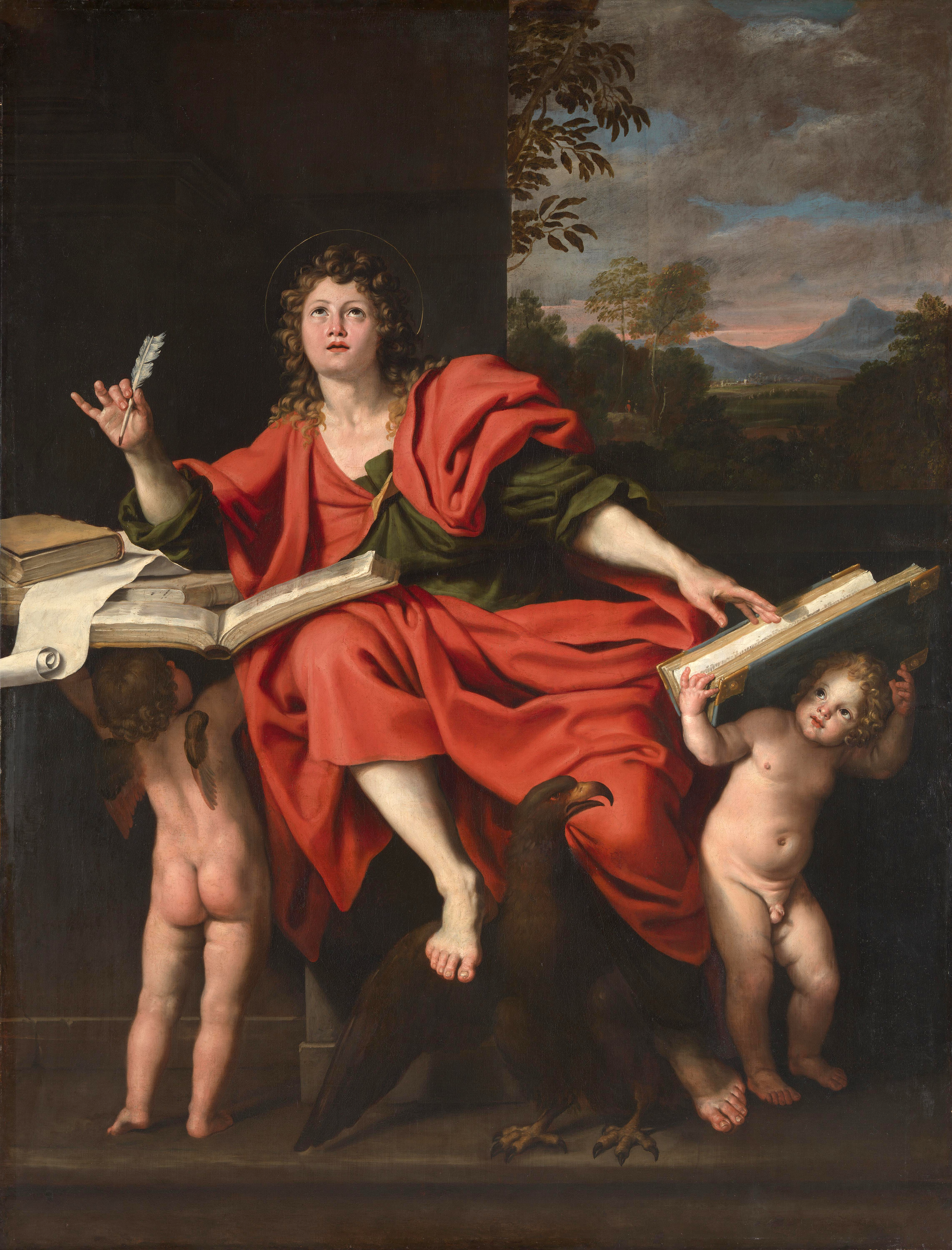
An equally theatrical portrait is Mrs Siddons - a well-known Welsh tragedienne of the 18th century - as the Tragic Muse, where Reynolds has portrayed the actress as Melpomene, the Muse of tragedy. Mrs Siddons took credit for coming up with the pose, but it is said to have echoed the one of prophet Isaiah from the ceiling of the Sistine Chapel, as well as Domenichino’s Saint John the Evangelist. William Vaughan states that basing the poses of his sitters on classical works of art ennobles the sitters by infusing them with the dignity of a work of art, and thus it elevates the social standing of the person depicted in the portrait.
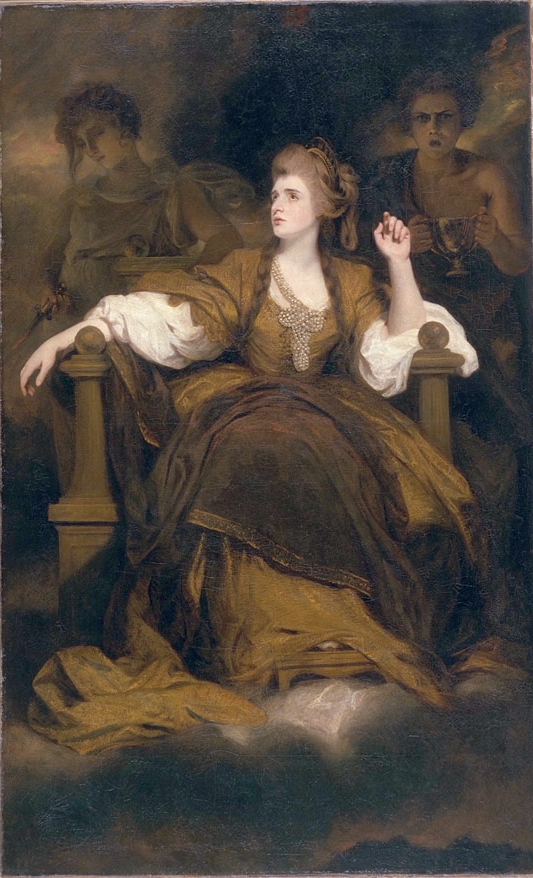
Sarah Siddons as the Tragic Muse by Sir Joshua Reynolds (1723-1792)
1784 or 1789 (?)
St John the Evangelist by Domenichino (1581-1641)
1621-1629
Prophet Isaiah, part of the Sistine Chapel fresco by Michalangelo (1475-1564)
ca. 1508-1512
As well as ennobling his sitters, Reynolds also had a great feel for theatricality, as can be seen in both portraits of Mrs Musters and Mrs Siddons. It can also be seen in a portrait of Mary Hale in which she is depicted in an allegorical bacchanal scene.

Mary Hale as 'Euphrosyne' by Sir Joshua Reynolds (1723-1792)
1762-4
The theatricality in the portraits can be linked to the rise of popular culture which Arnold Hauser argues happened because of the rise of the new and regular reading public. The increasing prominence of the well-to-do middle class, as Hauser writes, broke the cultural prerogatives of the aristocracy and showed a lively and every-growing interest in literature, thus becoming the new upholders of culture.

Play-acting was also a popular part of 18th century life, as grand country houses could easily be adapted for amateur theatricals. A painting like Mrs Musters as ‘Hebe’ shows how Reynolds makes the element of play-acting prominent. As Desmond Shawe-Taylor writes, her direct stare and smile and the execution of the painting – a simplicity of contour and a confident smudging of detail – lift her out of the timeless world of mythology and the ‘Grand Style’ of art, and into the midst of a Georgian parlour-game. There are other examples of artists who engaged with the ideas of play-acting in portraiture, for example, Daniel Gardner executed a group portrait of Elizabeth Lamb (Viscountess Melbourne), Georgiana Cavendish (Duchess of Devonshire) and Anne Seymore Damer as the three witches from Macbeth.

The Three Witches from Macbeth (Elizabeth Lamb, Viscountess Melbourne; Georgiana, Duchess of Devonshire; Anne Seymour Damer), by Daniel Gardner, 1775 - NPG 6903 - © National Portrait Gallery, London
The Three Witches from Macbeth (Elizabeth Lamb, Viscountess Melbourne; Georgiana Cavendish, Duchess of Devonshire; Anne Seymour Damer) by Daniel Gardner (1750?-1805)
1775
Shawe-Taylor also talks about the rise of the masquerade ball in which you mask your true identity until an appointed hour, and are expected to maintain your chosen character in both speech and behaviour. It can be argued that the same concept is applied to in a number of Reynolds’s portraits. The concept of theatricality, self-fashioning and masquerade is prominent in the portraits of a courtesan called Kitty Fisher.

In 1758, a year before Reynolds first met Fisher, an anonymous writer observed that there was a “graduation of whore in the metropolis: women of fashion who intrigue, demi-reps, good natured girls, kept mistresses, ladies of pleasure, whores, park-walkers, street-walkers, bunters, bulk-mongers’; Kitty Fisher was no ordinary prostitute.

Kitty Fisher as Cleopatra Dissolving the Pearl
Kitty Fisher as Cleopatra Dissolving the Pearl by Sir Joshua Reynolds (1723-1792)
1759
In the late 1750s, London society was fascinated by the behaviour of the most celebrated courtesan of the age, Catherine ‘Kitty’ Fisher, whose exploits and affairs were trumpeted in broadsheets and ballads. In her portrait where she is depicted as Cleopatra, she suspends a large pearl above a goblet of wine, a motif taken from the figure of Cleopatra in Francesco Trevisani’s Banquet of Anthony and Cleopatra. Her hand forms an ‘O’ shape which signals a sexual act, symbolizing Kitty’s potent sexuality. The comparison to Cleopatra is particularly apt, as Cleopatra’s famous act of consuming a dissolved pearl in wine before Mark Antony compares fashionably with Kitty Fisher’s notoriously extravagant behaviour, markedly the incident when she ate a hundred pound note on a piece of buttered bread. For such women, publicity was essential in order to fuel the fantasy purveyed by their extravagant behaviour and Reynolds fanned the flames of public interest and boosted their celebrity even further. The fact that Kitty was portrayed in a character, like many other ladies of nobility, shows us that she was able to use portraiture as a platform to raise her status in social circles on to the same level as bourgeois women.

Another significant change in the 18th century was the development of the Enlightenment. Denis Diderot, a French philosopher, art critic, and writer, promoted the ideas and values of the movement - e.g. reason, judgement, lack of luxury, new intellectualism, the rise of science, combatting top-down power structure and superstitions and beliefs of the earlier time, like how to raise a child.

The Age of Innocence by Sir Joshua Reynolds (1723-1792)
ca. 1788
Jean-Jacques Rousseau took these ideas and wrote a book called 'Emile' in 1762, in which he discussed the ideas of education, improvement of the ordinary man, the natural state of childhood, and childhood being linked to the development of good society. It was also influenced by the writings of John Locke, who recommended things like loose clothes and fresh air for children in the many manuals on child-rearing. In the 1st half of the 18th century, most children were wet-nursed by country women, sometimes until they were 3 years old. At the same time, 40% of children died before they turned 6. Children also were considered to be savages in the previous century, and society was eager to correct their mistakes.

People started to believe that children learned through play, be it through playing by themselves or with an adult or an older sibling. This also became a popular theme in painting, and painters began to depict children with their parents, siblings, or on their own - to show the balance between play and learning. Children were finally considered to be separate from adults.

The Brummell Children by Sir Joshua Reynolds (1723-1792)
1782
Reynolds, alongside other painters at the time, also painted images of mothers with their children. More specifically, his depiction of high-society women with their children conforms with Enlightenment ideas is a way that the mothers are engaging with their offspring, however, they still retain an image of grandeur as the setting and their wardrobe is the same as if they had been depicted in a regular portrait by Reynolds. One could argue that the purpose of these paintings - where you can observe a strong Madonna-like imagery - is to demonstrate to the viewer their qualities of motherly virtue as a high-society lady, setting the perfect example for other women to aspire to.

Lady Cockburn with her Children by Sir Joshua Reynolds (1723-1792)
1773
Lady Smith (Charlotte Delaval) and Her Children (George Henry, Louisa, and Charlotte)
Lady Smith (Charlotte Delaval) and her Children (George Henry, Louisa, and Charlotte) by Sir Joshua Reynlds (1723-1792)
1787
File:Duchess of Devonshire by Joshua Reynolds.jpg
Duchess of Devonshire and her Daughter Lady Georgiana Cavendish by Sir Joshua Reynolds (1723-1792)
ca. 1785
In conclusion, portraiture in 18th century England provided a wide platform for women to engage in a multitude of things, for example, like theatricality, feminity, and fashion, They could also play around with notions of construction of identity and the concepts of celebrity - and besides that, the changes in attitudes towards children and child-rearing meant that there was an increase of portraits painted where the sitter (the mother) is engaging with their child or children.

Joshua Reynolds, who I have been focusing on in this essay, used the power of art to transform something dross and material into magic, as can be seen in the paintings I have presented.

I would like to finish this post with a statement Marcia Pointon wrote in Strategies for Showing, where she writes:

Portraits don’t provide us with an ordering process reflecting social structures of 18th century England. In Reynolds’s work there is a strand of female portraiture that serves precisely the opposite function; these are images that provide for the expression of disorder, that establish a site of excess, of unruly passion and equilibrium.

SOURCES

Hauser, Arnold. The Social History of Art. 4 vols. New York: Vintage Books, 1962.

Jones, Robert W. “‘Such Strange Unwonted Softness to Excuse’: Judgement and Indulgence in Sir Joshua Reynolds’s Portrait of Elizabeth Gunning, Duchess of Hamilton and Argyll.” Oxford Art Journal 18, No. 1 (1995): 29-43.

Mann, Emily. “Face Value.” New Statesman 713, vol. 15 (2002): 42-44.

Pointon, Marcia. Strategies for Showing: Women, Possession, and Representation in English Visual Culture 1665-1800. Oxford: Oxford University Press, 1997.

Postle, Martin, ed. Joshua Reynolds: The Creation of Celebrity. London: Tate Publishing, 2005. Exhibition Catalogue.

Shawe-Taylor, Desmond. The Georgians: Eighteenth Century Portraiture and Society. London: Barrie & Jenkins, 1990.

Vaughan, William. British Painting: The Golden Age. London: Thames and Hudson, 1999.

Monday, 5 October 2015

Hands and Feet of Duchesses: Bouguereau and the Idealization of the French Peasant


William Adolphe Bouguereau (1825-1905) was a French Academic painter who was a prominent figure in the Salon. He painted a lot of mythological, religious and allegorical pictures which was typical of academic painters of the time. The smooth, neoclassical finish of his paintings and his expert rendition of human flesh had earned him a lot of prizes in his lifetime - he obtained the first Grand Prix de Rome and a scholarship at the Villa de Medici in Rome in 1850, at just the age of 25. He was made Chevalier of the Legion of Honour in 1859 and a member of the Académie de Beaux-Arts and Officer of the Legion of Honour in 1876. He was also appointed a professor at the École de Beaux-Arts in 1888 and made Grand Officer of the Legion of Honor in 1902.

The Virgin with Angels by William Adolphe Bouguereau (1825-1905)
oil on canvas, 1900
The Birth of Venus by William Adolphe Bouguereau (1825-1905)
oil on canvas, 1879
Portrait of Elizabeth Jane Gardner by William Adolphe Bouguereau (1825-1905)
oil on canvas, 1879
Throughout Bouguereau's career, the world saw the greatest explosion of styles, subjects and experimentation in all of art history including expansion and development both technically and thematically that had ever occurred before since the Enlightenment. The great Academic painters of the 19th century (Cabanel, Gérôme, Alma-Tadema, etc.) were all pushed aside by the new Modernist theory. Bouguereau's painting style and subject matter was everything the Impressionists and Realists loathed. His name became somewhat of a joke, as Degas and his Impressionist friends called very smoothly finished academic paintings "Bouguerated". Van Gogh also disliked Bouguereau. In a letter he wrote to his brother Theo in August 1888 he said that "if we painted like Bouguereau people wouldn't be ashamed to let themselves be painted," and "if we painted like Bouguereau, that we could then hope to earn."

It comes as no surprise that after Bouguereau's death in 1905, the popularity of his work suffered a steep decline due to the rise of the new Avant-Garde ideas and art movements in the early 20th century. His work was considered kitsch and untasteful, and only after the 1970s did it become 'acceptable' to appreciate his works once again.


One genre of painting that Bouguereau was praised for were paintings of peasants. During the aforementioned explosion of styles, subjects and experimentation was a rise of the genre of peasant paintings and changes in attitudes towards them. At first, they were simple, idyllic pictures with strong religious or moral undertones, but the French Revolution of 1848 brought about a change in how people treated peasants and how they were represented in art.

The Milkmaid by Greuze (1725-1805)
oil on canvas, 1780-4?
The Shepherdess by Jean-Honoré Fragonard (1732-1806)
oil on canvas, ca. 1750-2

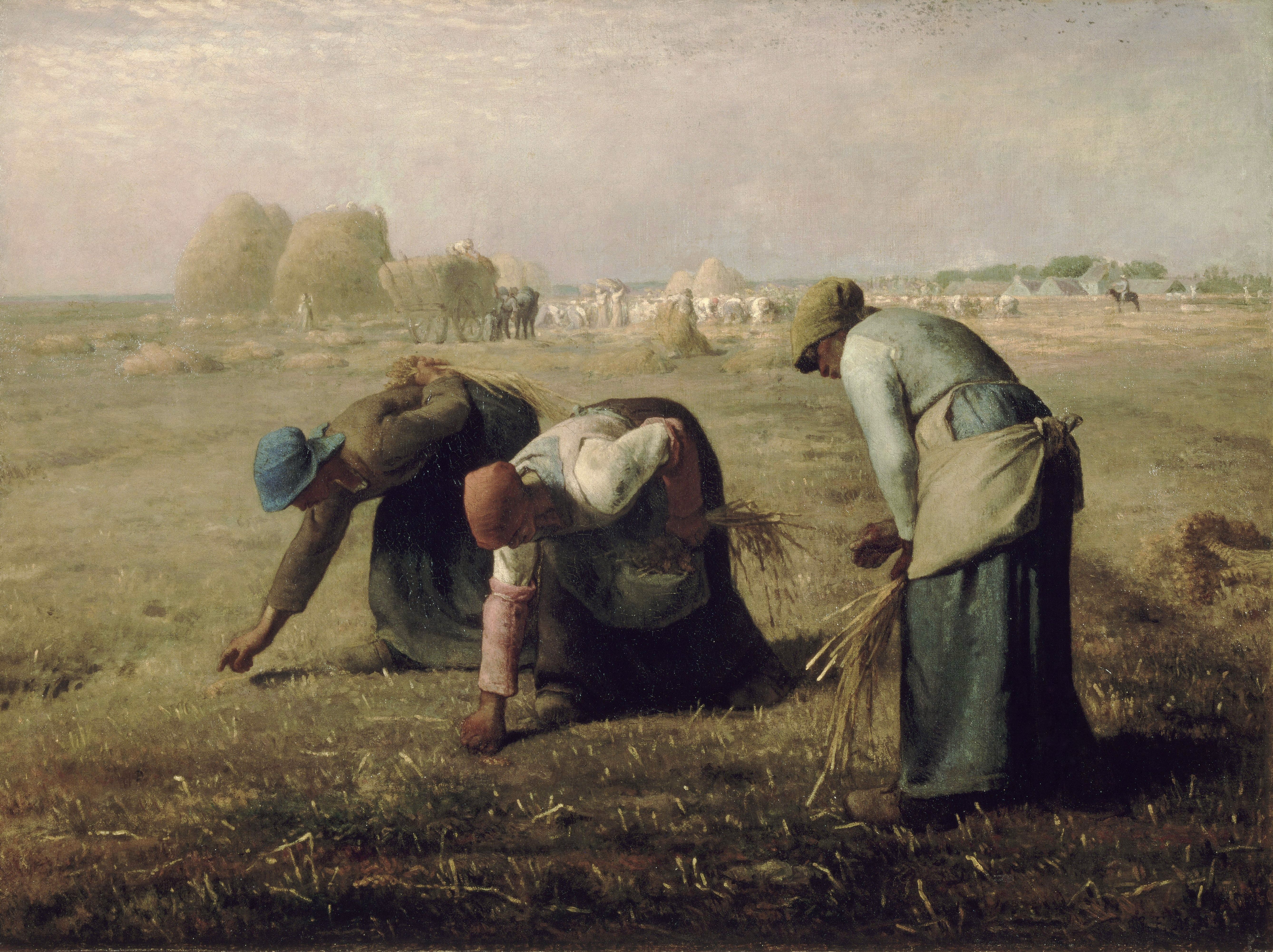
Artists like Millet, Bastien-Lepage and Courbet painted peasants as realistically as possible, warts and all. Many paintings representative of rural life were painted without idyllic and pastoral associations as paintings of peasants became more relevant to modern life. 

October by Jules Bastien-Lepage (1848-1884)
oil on canvas, 1878
The Gleaners by Jean-François Millet (1814-1875)
oil on canvas, 1857

The Stone Breakers by Gustave Courbet (1819-1877)
oil on canvas, 1849
Although a lot of artists preferred to depict the gritty reality of rural life, grand paintings of mythological and historical scenes were still more popular in the Salon. As time went on however, more academic painters had started to depict peasants and the countryside in their art. What begun as a resistance against the Academic style was now a popular and socially acceptable genre. The characteristics of rural life that been thought of expressions of the peasants' victimization were now gone and transformed into civic qualities which was hoped that the urban poor would emulate. 

Rest by William Adolphe Bouguereau (1825-1905)
oil on canvas, 1879
File:Breton - Fille de pêcheur, 1878.jpg
A Fisherman's Daughter by Jules Breton (1827-1906)
oil on canvas, 1878
Thus, the appearance of the peasant in artworks by Academic painters changes yet again. For example, Rest by Bouguereau and A Fisherman's Daughter by Jules Breton are complete opposites to the works of Courbet who made an effort to duplicate the hard life of the peasant on the canvas.

On the ArtRenewalCenter website, in an entry for Rest, Kara Ross writes;
"Though the family depicted in this scene is poor, one can tell that they understand that money does not necessarily buy happiness. The mother tenderly holds her baby with her older son asleep at her feet indicating the joy and peace that can be found in everyday family life and in motherhood. The mother gazes out at her viewers as if to ask how she could possibly need more then she already has, her greatest treasures lying in her arms and at her feet. Bouguereau was a deeply religious man, and the church in the background symbolizes that God rules over the rich as well as the poor, and that all people are children of God and equal in His eyes."
This interpretation of the painting is correct to a certain point, however it completely ignores the fact that the image Bouguereau has produced is an idealized version of the real-life peasant which has sugar-coated the aspects of being a part of the working class. "Money does not necessarily buy happiness": Indeed it may not, but it does buy necessary things one may need to survive and have a comfortable life which can contribute to happiness. 
William-Adolphe Bouguereau (1825-1905) - The Shepherdess (1889).jpg
The Shepherdess by William Adolphe Bouguereau (1825-1905)
oil on canvas, 1889
The Shepherdess by Bouguereau is also a very idealized image of the peasant. The painting depicts a young girl with dark hair in front of a vast landscape, with grazing cattle in a field behind her. It has a peaceful, idyllic atmosphere. She has good posture which makes her look confident, and the hilly landscape behind her and the raised foreground makes it look like she is looking down on the viewer.

Children were a favourite of Bouguereau's to paint. He had young girls from Brittany pose for him in his garden in La Rochelle, calling those paintings either "Little Shepherdess", or "Little Beggar" - whatever he felt like at the time and what kind of a 'vibe' he was getting from the sitter.

Although these 'shepherdesses' and 'beggars' were dressed in simple peasant clothes and didn't wear any shoes, as Louis Sonolet wrote, "they have the hands and feet of Duchesses", which rings true as the skin of the peasants in Bouguereau's painting look too pure, their feet too clean, their hands too smooth, their faces young and free of any signs of a hard life, and their clothes look too fresh, as if they are being worn for the first time. Sonolet also stated that Bouguereau "Never tried either exactly to represent the characters before him or to reproduce the types of a certain class. He made for himself an abstract image of beautiful forms, completely independent, so to speak, of anything that could affect or modify it. In his way of rendering nature a considerable part of it is purely subjective. He never stops with things exactly as they are. He cannot help idealizing all the touches." Bouguereau indeed could not help 'idealizing all the touches', as in an article by Eugene Tardieu he said that "in painting, I am an idealist. I only see the beautiful in art and, for me, art is the beautiful. Why reproduce the ugly things that exist in nature? I see absolutely no need for it, unless it can be done by someone who is immensely talented."

Anyhow, many painters chose children as their subjects, skirting social issues and sugar-coating the hardships of rural life. By choosing children to be the protagonists of their paintings made the works more acceptable to be hung in the homes of the middle and upper classes, as the vulnerable and charming little kids made no overt demands for help and sweeping political reform. These kinds of pictures fit into the sentimental and anecdotal taste of the period.

Shepherds and shepherdesses were also popular subject matters, it’s said that they were regarded as more respectable members of the society. Certain shepherds acquired some sort of a heroic status and had an aura of respectability about them.

William Adolphe Bouguereau (William Bouguereau)
The Little Beggar by William Adolphe Bouguereau (1825-1905)
oil on canvas, 1880
A lot of academic artists who painted peasants painted unrealistic representations of rural life. They were biased by many preconceived ideas derived from their social background, training and what was popular with the critics and patrons. These paintings were painted by the upper classes, for the upper classes. They didn’t want a dirty peasant cowering in a field; they wanted a beautiful woman standing in a field, much like paintings from past centuries where French aristocrats were seen play-acting at being shepherds or their mistresses “merry-making” as milkmaids. The artist was chasing the peasant but couldn’t catch them, instead he got his shadow.

The Dancing Milk Maids by Francis Hayman (1708-1776)
oil on canvas, ca.1735
William Adolphe Bouguereau (William Bouguereau)
The Harvester by William Adolphe Bouguereau (1825-1905)
oil on canvas, 1868
Being from a wealthier background, artists were also able to travel around the world to seek inspiration. As mentioned earlier, Bouguereau was awarded a scholarship in Villa de Medici and the Grand Prix de Rome in 1850- meaning he studied in Italy and undertook a grand tour of Europe. In consequence it is very possible that the rural life of Italy also influenced his work, as he would’ve often made studies from life based on local peasant models.

Italy reminded the French of the classical world, so over the course of the century all manner of Italian costumes and customs also were presented to the public. For example, Bouguereau’s painting Return from the Harvest painted in 1879 has a very religious and mythological feeling to it and is the most inaccurate representation of rural life possible, as there was no French equivalent to the Italian south. These kinds of paintings are very similar to ones in the style of Orientalism, but can also represent artistic escape.

Return from the Harvest by William Adolphe Bouguereau (1825-1905)
oil on canvas, 1878
Linda Nochlin writes that the representation of labour in art had become “feminized” during that time, as there was a lack of ploughmen, sowers and stonebreakers. 

On one hand, the peasant became a modern goddess. More specifically, the Goddess of the harvest, Ceres. There was no sense of contemporaneity that was associated with early Realism. Paintings no longer showed the peasants as suffering victims of exploitation. 

On the other hand, the female peasant became a political symbol. Painters painted a lot of milkmaids and shepherdesses, and Nochlin stated that those kinds of paintings represented the “ideological definitions of femininity” and “the good worker”. The feminized peasant paintings acted as a sister to alternative images of the country, like Liberty, in Delacroix's Liberty Leading the People. They were symbols of calm, productive labour and imagined rural stability. She, like the late Realist peasant woman, successfully encased political modernity within a cloak of “traditional values”.

Eugène Delacroix - La liberté guidant le peuple.jpg
Liberty Leading the People by Eugène Delacroix
oil on canvas, 1830
The implied imagery of the working peasant in the role of a powerful figure could also serve as something that could empower the lower classes, however you cannot deny that Bouguereau's prerogative to sugar coat the reality of peasant life, alongside many other artists who idealized French rural life, played a bigger part in the erasure of the hardships of the lower classes and reinforcement in the upper classes of the idea that the lower classes are happy with being poor, thus releasing them of any guilt that they might be a part of a system that victimizes the poor. 

Sources

Tuffelli, N., 19th Century French Art: 1848-1905, Edinburgh: Chambers Harrap Publishers, 2004

Glueck, G., "Art View: To Bouguereau, Art was Strictly the Beautiful", New York Times, 6 January 1985

"Bouguereau and the Real 19th Century"
https://www.artrenewal.org/articles/Philosophy/TheReal19thCentury/thereal19thcentury.php

http://www.vangoghletters.org/vg/search/simple?term=bouguereau

Bezucha, R. J., "The Urban Image of the Countryside in the Late 19th Century French Painting; And Essay on Art and Political Culture", in Sturges, H,, The Rural Vision: French and America in the Late 19th  Century, Nebraska: Nebraska Press, 1982, pp. 13-21

"William Bouguereau - an Introduction by Fred Ross"
https://www.artrenewal.org/articles/2010/BouguereauIntroduction/BouguereauIntroduction.php

The French Peasant in French 19th Century Art, Exhibition Catalogue by Thompson, J., Dublin, Trinity College, 1980

Author Unknown, Bouguereau: French School, Boston: Bates and Guild, 1906, p. 416

"Bouguereau at Work"
https://www.artrenewal.org/articles/Technical_Articles/WALKER-BOUGUEREAU/WALKER-BOUGUEREAUpage1.php

Sunday, 6 September 2015

Lady photographers of Weimar Germany


Hello all, I just felt like sharing some photography with you tonight.

I wrote an essay in my final year of university for my German art class on the New Woman trope in Weimar Germany and the role female photographers held in regards to it. Like usual, the essay was left to last minute (the night before the deadline) and I didn't exactly know that I was writing about female photographers until I was about half way through the essay... 

Nevertheless, I discovered some great photographers who took some beautiful pictures. Some of them have this haunting quality to them and they embody the ideals of the modern woman of the early 20th century. What I love about them is that most of the photographers I looked at took a large number of self-portraits, turning the New Woman trope upside-down. The photographers deny the man to construct a fetishized image of women living in Weimar Germany and instead, they present themselves however they want to be seen. 

GERTRUDE ARNDT (1903-2000)

Gertrude is one of my favourite photographers, being a part of the Bauhaus movement (I have a soft spot for Bauhaus). She is mostly known for her series of 43 self-portraits she took in the 1930s.
Read more about her here, here and here


Masked Portrait No. 34, 1930
Gertrude Arndt
Masked Portrait No. 28, 1930
Gertrude Arndt
Masked Portrait, 1930
Gertrude Arndt
Masked Portrait, 1930
Gertrude Arndt


MARTA ASTFALCK-VIETZ (1901-1994)

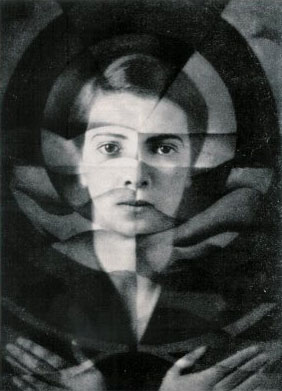
By far probably my most favourite photographer/artist ever, Marta's work is dark, ethereal, erotic and mesmerizing. She isn't very well known, and material on her is scarce (as I found out, sitting in the university library at 6am...), but you can still find some of her works floating around on the internet if you do a quick search of her name on Google. 

Dr Katherine Tubb recently curated a show of her works in Glasgow, which was Marta's first ever solo show outside of Germany. Tubb writes that the works show a range of personal responses to the social, political and sexual transformations of Germany after World War I. They also provide to be a good example of construction of identity.

Marta Astfalck-Vietz, No.20 Self-Portrait, no date
Self Portrait No. 20, Date Unknown
Marta Astfalck-Vietz
Selbstmord in Spiritus (Suicide dans l'alcool), 1927
Marta Astfalck-Vietz
YVA (1900-1942?)

Yva was born as Else Ernestine Neuländer-Simon, and opened her own photographic studio in 1925. She established herself as one of the leading photographers in Berlin until her forced removal from public life in the late 1930s due to the ultimate intentions of Nazi racial policy.

At her most popular, she produced photos for the growing number of illustrated magazines and periodicals in circulation, like Gebrauchsgraphik and UHU
In 1930, she began contributing photo-stories to the magazine UHU, which were directed at the young female reader, covering many popular themes such as young women arriving in metropolitan Berlin from the countryside and their many trials and tribulations they faced on their road to stardom. These photo-stories allowed Yva to move beyond the limitations of the static photo image and produce highly competent work in an intermediary genre between photography and film. 

Self Portrait, 1926
Yva
Young couple flirting, Man wearing a suit and woman wearing a lace evening gown- Photographer: Yva- Published by: Uhu 9/1932Vintage property of ullstein bild
Published by UHU, 1932
Yva
Yva- Published by: ' Uhu' 2/1932/1933Vintage property of ullstein bild
Published by UHU, 1932/3
Yva
File:Yva Fashion Photo Bathing Suit Modell Schenk c1930.jpg
Ca. 1930
Yva

EXTRA READING ON WOMEN ARTISTS IN THE WEIMAR REPUBLIC
  • Practicing Modernity: Female Creativity in the Weimar Republic by Christiane Schönfeld, Carmel Finnan (partly available on Google Books)
  • Visions of the "Neue Frau": Women and the Visual Arts in Weimar Germany by Marsha Meskimmon, Shearer West
  • We Weren't Modern Enough: Women Artists and the Limits of German Modernism by Marsha Meskimmon (partly available on Google Books)
  • Women in the Metropolis: Gender and Modernity in Weimar Culture by Katharina von Ankum (partly available on Google Books)