Showing posts with label art. Show all posts

Thursday, 14 April 2016

Cinema and Art: A Brief Encounter...

Hello everybody! I'm sorry for the lack of posts over these couple of months. I've been going through some shit and I haven't really had the energy to write anything. BUT! Today I had a random surge of motivation and decided to finish off this post that has been sitting in my drafts for eons. It's a more casual post, but I wanted to write something more fun before diving back into writing serious essays and articles.

To a certain extent, film and art are very much connected, and have been for a long time. Artists have used film to make work, and filmmakers have used artworks in their movies. Artworks are mainly used in film as a device to foreshadow future events, add depth to a scene, or simply just enrich the meaning of the movie or tv show.

EX MACHINA

Ex Machina, 2015, dir. Alex Garland
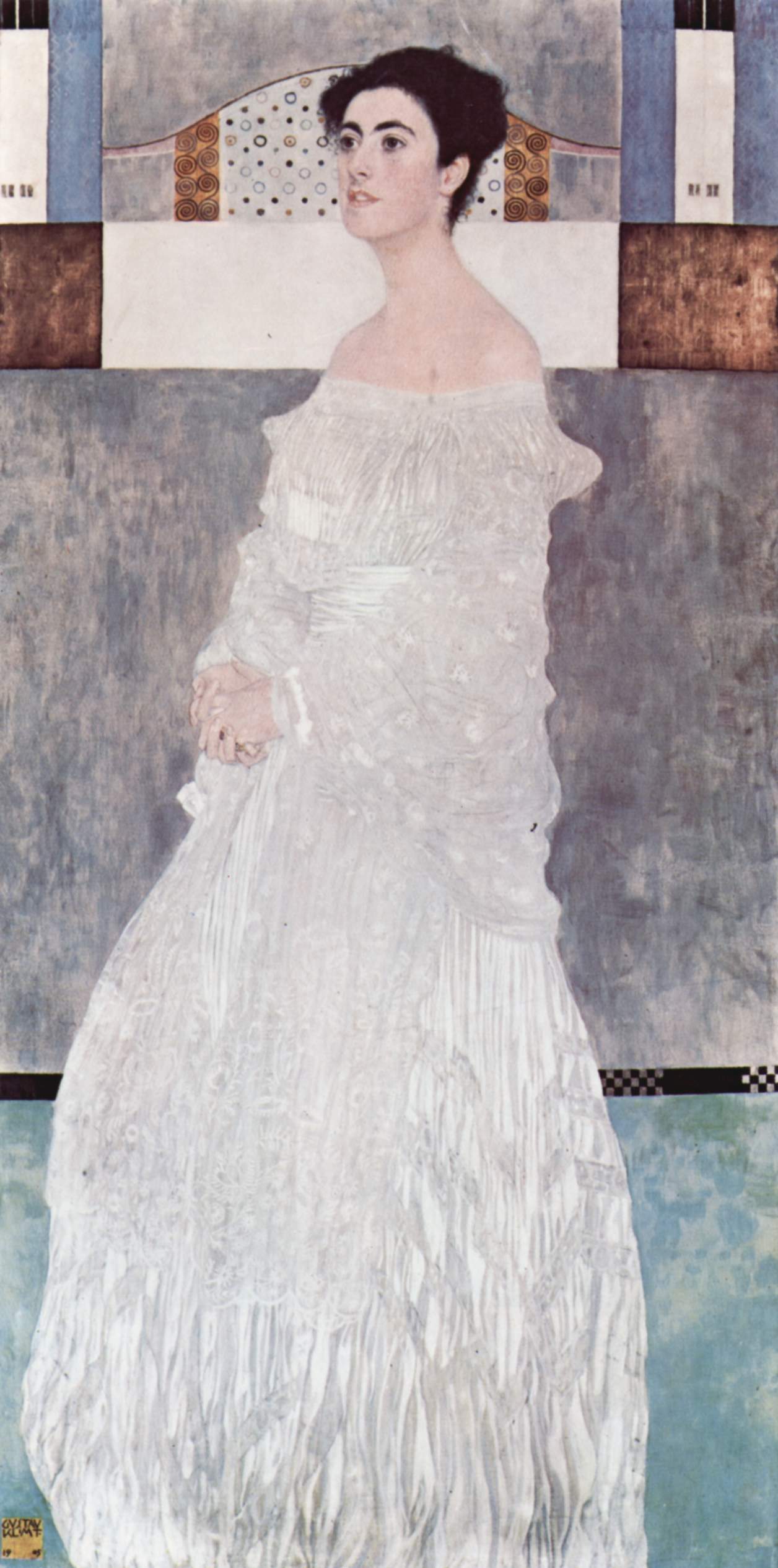
Ex Machina was interesting to me because of its use of a Jackson Pollock painting and a Klimt portrait (which was shown very briefly, if I remember that correctly..) The use of Pollock in that particular scene was curious. Isaac's character, Nathan Bateman, uses Pollock and his painting style to illustrate the point that willpower gives the illusion of free will. When you really start to think about it, it's a massive clusterfuck of the philosophy of free will and consciousness, which, in all honesty, gave me a headache!!
THE CHALLENGE IS NOT TO ACT AUTOMATICALLY, IS TO FIND AN ACT THAT IS NOT AUTOMATIC...
Here is the scene...

As to why the producers/set designers/writers/etc decided to put the portrait of Margaret Stonborough-Wittgenstein in Ava's room, I don't know. However, I did know that Margaret's brother, Ludwig, was a philosopher. A quick search in google showed me that his work was mainly about communication between people and the difficulties of language. Perhaps the philosophy of communication and Ludwig's ideas on it form a parallel to the communication between Ava and Caleb? Or, does Margaret Wittgenstein represent Ava in a way, and Ludwig represents Nathan?

Ex Machina, 2015, dir. Alex Garland
Portrait of Margaret Stonborough-Wittgenstein  by Gustav Klimt (1862-1918)
oil on canvas, 1905
Hannah K. Gold's article has a very good section on the 'iconography' of Ludwig Wittgenstein in the movie:

Like Ava, Nathan himself has an imposing father figure: Ludwig Wittgenstein. In addition to Pollock’s drip paintings, Nathan hangs in his bunker Klimt’s portrait of Margaret Stonborough, Wittgenstein’s sister. He also names his company after a section from Wittgenstein’s notebooks, which—like Mary’s Room—is about the limits of symbolic, fixed language, words divorced from experience. A passage from Wittgenstein’s journal reads: “The meaning of a phrase for us is characterized by the use we make of it.” Which is to say: It’s not what we say but how we say it, including to whom. Or, as Nathan puts it, there is no consciousness without interaction. One must dip in and out of other psyches in order to gain knowledge.

GOTHAM

Gotham is a TV series based on the Batman franchise, focusing mainly around Bruce Wayne and James Gordon. I've only seen the first season, I wouldn't say it's the best but it's got very good pacing and it keeps me interested in what's going to happen next.

ANYWAY! The reason why this series is featured is because, in one of the rooms in Bruce Wayne's house, you can see Oath of the Horatii! 

Gotham series 1, 2014-2015
Oath of the Horatii by Jacques-Louis David (1748-1825)
oil on canvas, 1784
This, I think, is the simplest one to put together symbolically. The painting, in which the Horatii brothers swear to defeat their enemies or die, can be linked to the storyline of Bruce Wayne, who's parents are murdered, which leads him to become Batman of course.

The placement and emphasis of the painting in the room, and if I remember correctly it makes more than one appearance, made me really happy as an art historian and it was just really satisfying to see it in the background. More artworks in movies/tv shows please for enhanced viewing experiences!!

FERRIS BUELLER'S DAY OFF

This is more of an honorary mention if I'm completely honest, because I think this must be one of the most iconic uses of art in film ever, so I though I should at least mention it briefly.

Ferris Bueller's Day Off, 1986, dir. John Hughes
John Hughes said this in regards to the scene; 
“I always thought this painting was sort of like making a movie, the pointillist style,” he says. “You don’t have any idea what you’ve made until you step back from it. ... The more he looks at it, there’s nothing there. He fears that the more you look at him, the less you see.”
A Sunday Afternoon on the Island of La Grande Jatte by Georges Seurat (1859-1891)
oil on canvas, 1884-6
And honestly... that's about it! I haven't seen a lot of movies recently and the ones that I have watched, I can't remember any artworks catching my eye...

You can look up more paintings that have been in movies here, and here.

There's a book that's specifically focuses on the use of art in cinema, you can look at a few (very few...) pages of it on google books here.

SOURCES

https://www.washingtonpost.com/blogs/arts-post/post/john-hughes-video-explains-ferris-bueller-scene-at-art-institute/2011/11/16/gIQAZBAERN_blog.html

http://www.louvre.fr/en/oeuvre-notices/oath-horatii

https://newrepublic.com/article/121766/ex-machina-critiques-ways-we-exploit-female-care

https://www.youtube.com/watch?v=pQ33gAyhg2c

https://newrepublic.com/article/121766/ex-machina-critiques-ways-we-exploit-female-care

https://books.google.co.uk/books?id=TVSlBgAAQBAJ&dq=art+in+film&source=gbs_navlinks_s


Sunday, 3 August 2014

monday night musings on museums


I haven't written a blog post in about a year or so, but that's okay. I was going to make a new blog as I feel like I have all these new ideas in my head swimming around and that this one with its old posts wasn't a suitable platform. But I don't mind having them here I guess, I'd rather have old posts to build upon rather than write an awkward introductory post on a new blog.
That isn't to say that this post itself isn't something of an awkward introductory post ...

I want to talk about museums tonight, more specifically about people's behaviour in art galleries/museums/gallery spaces/etc ... There's an unwritten Code of Conduct that somehow exists and must be followed once you are in the white cube space and if you break it you're seen as an uneducated pleb that doesn't understand art. That's probably why everyone acts the same in art galleries, so that they're seen as smart.

Thomas Struth / Museum Photographs (1989-2000)

It's the same in every gallery I've been to, and I'm certainly guilty of doing the same. People first enter the art gallery, and almost immediately turn to their left. According to some of my art history lecturers who also have curated shows, this is a thing most people do when they enter a gallery space. Anyway.. 
What most people do is walk around the room, in a clockwise direction, slowly, pausing ever so often to read the label beside the artwork or to look at the artwork itself. Nobody really talks, and if they do, they whisper. It's the Code of Conduct of Walking Around Galleries and Looking at Art. 

Midnight in Paris (2011) / jolieing

I believe it's the overall aura of the museum that has become incredibly restricting and has taken the enjoyment out of visiting galleries. This 'aura' I'm talking about is purely imaginative but it's reinforced by the museums acting as surrogate cathedrals with its high ceilings, where the paintings on the walls act as icons and altarpieces. The stark contrast of artwork and the white wall gives the works an ephemeral quality and the quietness in gallery spaces, where only the clip-clop of heels or shuffle of tennis shoes can be heard, supports the idea of the museum space as a church interior. So obviously, museums are treated in a religious manner and not viewed as something that have educational purposes. 

Tate Britain / rimbly
Of course there are going to be people who don't view museums as places of worship but rather as places that are moreso boring and reserved for the higher classes/academics. 
In other words, there's a stigma that surrounds the art gallery (and especially galleries of modern/contemporary art...). 

A child climbs on a Donald Judd sculpture in Tate Modern / Children in Museums: it's the Parents Who Need Training 
With the new generation of the 'millenials' and the '90s kids' I feel like it's our job to challenge the authoritative voice of the museum (but not to the extent that we'd climb into priceless sculpture!!!) by going against the grain of the conventional behaviour in gallery spaces. 

Thomas Struth / Museum Photographs (1989-2000)

Walk around the gallery space for as long as you want. Zig-zag around the room from painting to painting, ignore the people swimming in the space in a clockwise direction. Sit down on the floor, draw the artworks. Get to know them. Come up with stories about the people in the paintings, the shapes of the sculptures, the curiosities of the installation art that nobody really gets. Make up your own meanings. Interpret freely. Don't read the labels (or read the labels?) Write down in a notebook what you like about the gallery space.
Take as little or much time as you want. You don't HAVE to look at all of the artworks in the museum in one visit, you will probably return in the future. Pick up a couple of works you are excited about seeing and look at them in more detail. Contemplate their form, the artists' motives and ideas, or just adore their beauty.

But most of all, don't feel pressured to have some sort of enlightening experience in the gallery. Relax. Have fun. Take it easy. 

Alécio de Andrade / The Louvre and it's Visitors (1965-1994)